A diesel truck that runs fine in the morning and starts cutting out in the afternoon heat is a pattern that techs see all summer and into early fall. Derates that only happen under load, intermittent no-communication with the scan tool, and random shutdowns on hot days can all point at a diesel ECM that is overheating. The module is not always dead. Sometimes it is protecting itself. And sometimes the heat has already done permanent damage.
Diesel ECMs are built to handle engine-bay temperatures, but they have limits. When those limits are exceeded because of a mounting problem, a missing heat shield, a failed cooling circuit, or sustained high-load operation in extreme ambient heat, the module can derate the engine, stop communicating, or shut down entirely. This post covers how heat affects diesel ECMs, how to tell heat damage from other faults, and what to do before the module fails completely.
How Heat Damages a Diesel ECM
Electronic components have temperature ratings. Capacitors, voltage regulators, and processor chips inside a diesel ECM are rated for continuous operation up to a specific temperature. Above that temperature, three things happen.
| Heat Effect | What Happens Inside the ECM | What the Driver Sees |
|---|---|---|
| Thermal shutdown | The processor reaches its protection threshold and shuts down to prevent permanent damage. | The engine derates or dies under load on a hot day and restarts after cooling down. |
| Solder joint fatigue | Repeated heat cycles expand and contract solder connections until they crack. A cracked joint creates an intermittent open circuit. | Intermittent codes, random no-communication, or a fault that comes and goes with temperature. |
| Capacitor degradation | Electrolytic capacitors dry out faster at high temperatures. Their capacity drops and the voltage they filter becomes noisy. | Sensor readings that drift, injector timing that becomes erratic, or a module that fails after years of marginal cooling. |
| Permanent component failure | A voltage regulator or driver chip exceeds its absolute maximum temperature and fails. | A dead ECM that will not power on, or one that powers on but cannot control injectors or communicate. |
The difference between a thermal shutdown and permanent damage is time. A module that overheats once and shuts down may be fine after it cools. A module that overheats repeatedly will eventually suffer solder or component failure that cooling will not reverse.
What Causes a Diesel ECM to Overheat
The ECM does not overheat because the engine is hot. Diesel engines are always hot. It overheats because something changed the amount of heat reaching the module or removed the cooling it was designed to have.
Missing or Displaced Heat Shield
Some diesel trucks have a heat shield between the engine and the ECM. When that shield is removed during service and not reinstalled, or when it shifts after a repair, the module gets direct radiant heat from the exhaust manifold or turbo. The temperature inside the ECM housing can climb 30 to 50 degrees above what it was designed for.
Blocked Airflow Around the Module
An ECM that is mounted on a fender well or firewall relies on ambient airflow to stay cool. Aftermarket insulation, relocated batteries, added wiring looms, or a missing fender liner can reduce that airflow. The module temperature creeps up slowly over months, and the failures start showing up on the hottest days.
Failed Coolant-Cooled ECM Circuit
Some heavy-duty diesel ECMs are actively cooled by engine coolant flowing through a plate or passage on the module housing. When the coolant line leaks, clogs, or gets air-locked, the cooling stops. The ECM can overheat quickly under load because it was never designed to survive on passive cooling alone.
Cummins ISX and ISB modules in certain applications use this setup. If the coolant lines to the ECM are disconnected or dry, the module is running without the cooling system it was engineered to have.
Sustained High-Load Operation in Extreme Heat
A truck pulling a heavy load up a grade in 110-degree ambient heat can push the engine bay above what the ECM can tolerate. This is not a defect. It is a limit. Fleet trucks in the Southwest, construction equipment in summer, and over-the-road trucks climbing mountain grades are the most common cases.
Symptoms of an Overheating Diesel ECM
Heat-related ECM problems have a signature: they happen when it is hot and they stop when it cools down. That pattern is the most useful diagnostic clue.
- Engine derate only under load or in hot weather — The module protects itself by cutting power. The derate clears after the truck sits or after the ambient temperature drops. This is different from a DEF derate, which follows aftertreatment codes.
- Intermittent no-communication with the scan tool — The ECM drops off the datalink when it is hot and comes back when it cools. A tech who only scans the truck in the morning may never see the fault. If INSITE or the OEM tool loses the module, the INSITE no communication guide covers the datalink checks.
- Shutdown followed by a restart after cooling — The truck dies on the highway. The driver waits 20 minutes with the hood open. It starts. That cycle repeats. A harness fault can do the same thing, so check the connector and wiring before condemning the module.
- Fault codes that set only on hot days — Any code that appears in summer and does not return in cooler weather is worth a closer look at the ECM temperature.
- Visible discoloration on the ECM housing or connector — A module that has been cooked may show yellowed labels, melted connector boots, or heat marks on the housing. That is evidence of sustained over-temperature exposure.
How to Diagnose ECM Overheating
Measure the temperature. Suspecting heat is not the same as proving it.
1. Take an Infrared Temperature Reading
Point an infrared thermometer at the ECM housing when the truck is under load and the symptom is present. Compare that reading to the manufacturer’s specification. If the housing is above spec, the module is above spec. On Cummins modules with coolant cooling, also measure the coolant line temperature at the ECM inlet and outlet.
2. Check the ECM Cooling System
If the module is coolant-cooled, verify that coolant is flowing to and from the ECM housing. Air in the line, a kinked hose, a clogged passage, or a disconnected line after a previous repair are all common. A Cummins ISX ECM that overheats after a coolant system service often has an air pocket in the ECM cooling circuit.
3. Inspect Heat Shielding and Airflow
Look for the heat shield. Is it there? Is it bent away from its original position? Has anything been added to the engine bay that blocks air to the ECM? Compare the installation to a factory service manual photo if possible. On a Dodge or Ford diesel, the shield is sometimes removed during turbo or exhaust work and never put back.
4. Rule Out Harness and Connector Faults
A harness that expands when hot can create an intermittent open on a signal or ground wire. A connector pin that backs out slightly when the housing heats up can mimic an internal ECM fault. Wiggle-test the ECM connector when the symptom is active. If the problem clears or changes with connector pressure, the issue may be the connection, not the module. Check the harness integrity the same way you would for a wiring harness problem before assuming the ECM is at fault.
What to Do About an Overheating Diesel ECM
Restore the Original Cooling
If a heat shield is missing, replace it. If the coolant line is disconnected, reconnect and bleed it. If aftermarket equipment is blocking airflow, reroute it. Many heat-related ECM symptoms go away completely once the module is getting the cooling it was designed to have.
Assess the Module for Permanent Damage
A module that works perfectly once cooling is restored probably survived. A module that still throws codes, still drops communication, or still derates after cooling is restored has likely suffered solder or component damage. At that point, it needs bench testing, repair, or replacement.
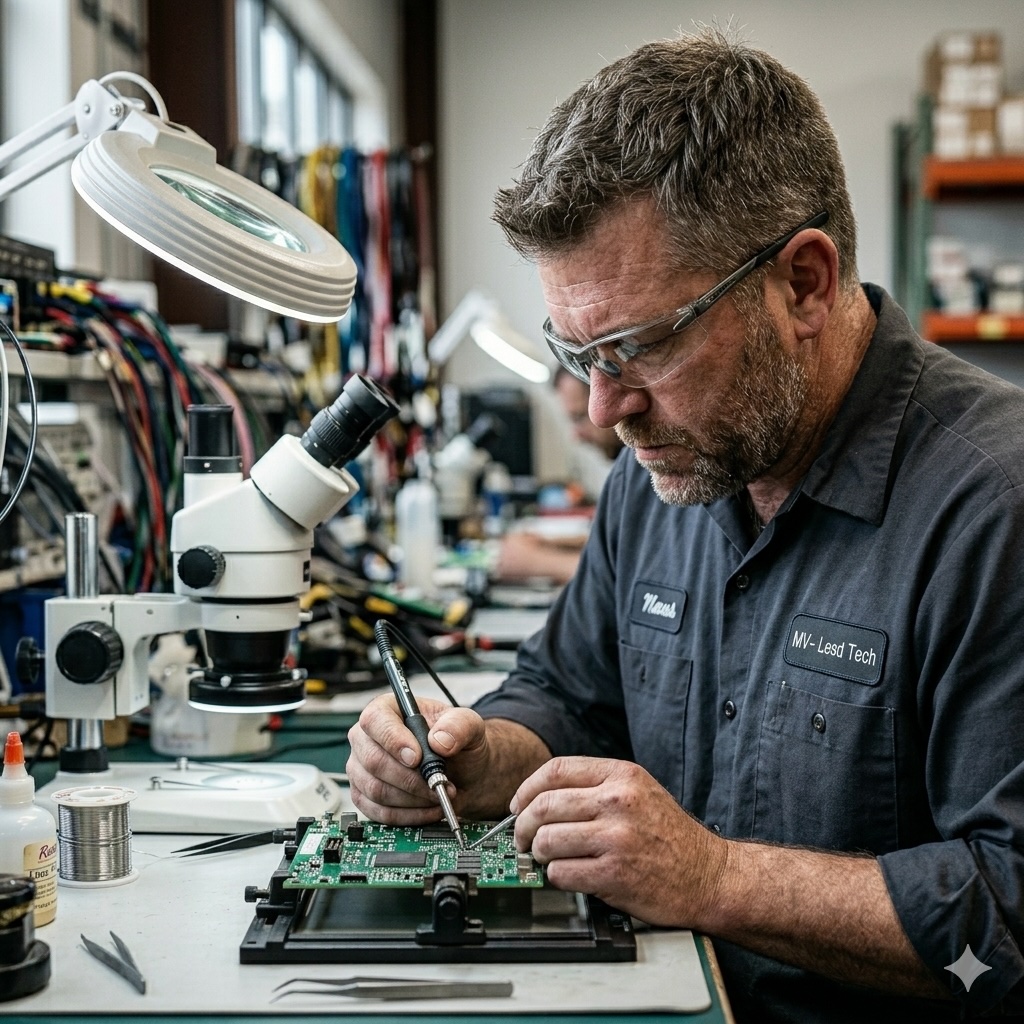
The repair vs replacement decision depends on the type of damage. A cracked solder joint can often be reflowed. A burned voltage regulator or a degraded capacitor bank can often be replaced. A processor with permanent thermal damage usually means the module needs replacement.
Cool the Module Before You Replace It
Diesel ECM overheating is a cause, not just a symptom. A module that derates on hot days and recovers when it cools is telling you exactly what is wrong. Measure the temperature, check the cooling system and heat shielding, and restore whatever was keeping the module in spec before it started failing. If the damage is already done, replace or repair the ECM and fix the cooling at the same time so the new module does not follow the old one.
Diesel ECM Exchange can bench-test a suspect module for heat damage, repair recoverable boards, or supply a programmed replacement that matches the engine and the truck.
Contact Diesel ECM Exchange if the truck is derating in the heat and the scan tool is pointing at the ECM.
Toll-Free: 1-800-446-0917
Email: sales@dieselecmexchange.com
Frequently Asked Questions
Can a diesel ECM overheat?
Yes. Diesel ECMs have temperature limits. A missing heat shield, a failed coolant cooling line, blocked airflow, or sustained high-load operation in extreme heat can push the module above its rated temperature. The result is derates, intermittent shutdowns, or permanent component failure.
Why does my diesel truck derate only when it is hot?
A derate that only appears under load in hot weather can be the ECM reaching its thermal protection threshold. The module cuts power to prevent permanent damage. It is different from a DEF or aftertreatment derate, which follows emission system fault codes. Measure the ECM housing temperature to confirm.
How do I cool a diesel ECM?
Restore the original cooling. Reinstall any missing heat shields. On coolant-cooled modules, verify that the cooling line is connected, flowing, and free of air pockets. Remove anything that blocks airflow around the module. Do not add ice packs or pour water on a hot ECM.
Can heat damage to a diesel ECM be repaired?
Often, yes. Cracked solder joints from thermal cycling can be reflowed. Failed capacitors and voltage regulators can be replaced. A processor with permanent thermal damage usually cannot be repaired and the module needs replacement. Bench testing can determine which category the damage falls into.
How hot is too hot for a diesel ECM?
Most diesel ECMs are rated for continuous operation up to around 185 to 210 degrees Fahrenheit at the housing, depending on the manufacturer. Above that, the module enters a protection zone. Sustained temperatures above 230 to 250 degrees can cause permanent component failure. Check the OEM specification for the specific module.